 EMZETT.
Subdomain
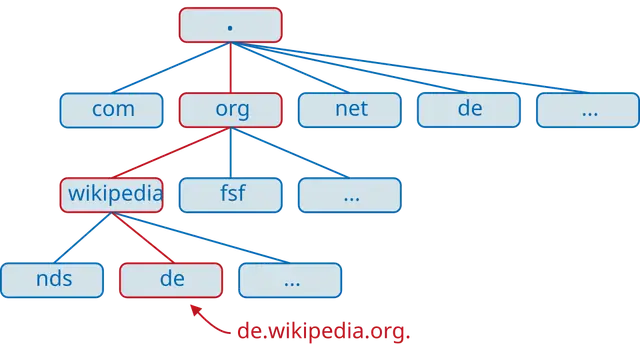 Image: Unbekannt, CC BY-SA 2.5, Wikimedia Commons

In short: An additional name part before the Second-Level Domain, e.g. wiki in wiki.emzett-digital.com.
In more detail: Subdomains are created via their own DNS record (usually CNAME or A record) and let you separate different services or areas under the same domain without having to register a new domain — e.g. shop., api., or wiki..
In Depth
Unlike second-level domains, subdomains normally don’t cost anything extra — they aren’t created at the registry, but directly at the domain’s DNS host via a record (usually CNAME or A record), and a domain owner can create as many as they like. Typical patterns in practice:
www.emzett-digital.com      -> the main website
api.emzett-digital.com      -> the API, possibly on a separate server
wiki.emzett-digital.com     -> the wiki (this project)
shop.emzett-digital.com     -> a separate shop area
Subdomains let you run different services under the same brand name in a technically completely independent way — each subdomain can point to its own server, its own deployment, or even a completely different provider, without affecting the other subdomains. A special case is the wildcard subdomain (*.emzett-digital.com), which redirects all not-yet-explicitly-defined subdomains to one target — useful, for example, for multi-tenant systems where every customer automatically gets their own subdomain (customer1.emzett-digital.com, customer2.emzett-digital.com, …), without needing to create a separate DNS record for each one.
See also: Domain, Second-Level Domain, CNAME