 EMZETT.
Google Chrome
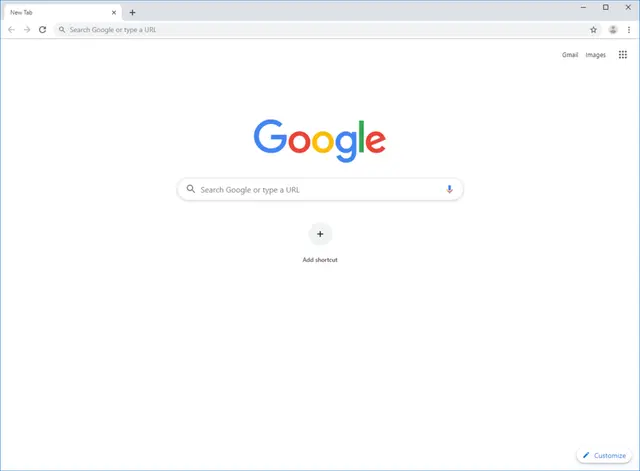 Image: WikiPimpi, Public domain, Wikimedia Commons

In short: The browser developed by Google, based on the open-source Chromium engine.
In more detail: The most-used browser worldwide, which makes it a de-facto standard for web development — many web APIs are introduced in Chrome first. Chromium also forms the basis for other browsers like Microsoft Edge.
In Depth
Chromium vs. Chrome
Chrome itself isn’t completely open source — the underlying engine, Chromium, is open source (maintained and published by Google itself) and forms the technical basis, on top of which Google adds proprietary components: account sync, certain video codecs (H.264 licences), the PDF viewer, remnants of Flash compatibility, and deep integration with Google services (Google account login, password manager sync, translation via Google Translate). This split allows other manufacturers to adopt Chromium for their own browsers, without Google’s proprietary extras — Microsoft Edge, Brave, Opera, Vivaldi and many other browsers came about this way, each with their own differentiating features on top of the same technical base.
V8 and performance
Chrome’s JavaScript engine (V8) has been considered a milestone for web performance since its introduction in 2008 — V8 compiles JavaScript directly into machine code at runtime (just-in-time compilation), instead of merely interpreting it, which considerably sped up web applications. V8 is used today not only in Chrome itself, but also forms the basis of Node.js — JavaScript code outside the browser (server, CLI tools) usually runs on exactly the same engine.
Market dominance and its consequences
For web developers, Chrome’s market dominance is a double-edged sword: on the one hand, a reliable common denominator for testing (most users actually see a website in Chrome), on the other, the risk that websites unintentionally only work correctly in Chrome, if they aren’t deliberately also tested against other engines (Firefox’s Gecko, Safari’s WebKit) — a pattern critics see as a repeat of Internet Explorer’s historical dominance in the 2000s. Google’s position as both a browser manufacturer and the operator of the internet’s most important advertising platform also leads to recurring accusations of conflict of interest, for example with changes to the ad-blocker extension API (Manifest V3), which technically restricts ad blockers.
Developer tools
Chrome’s own developer tools (DevTools, accessible via F12 or right-click → “Inspect”) are the de-facto standard tool for client-side debugging, network analysis (which requests a page loads, how long they take) and performance profiling (exactly where a page spends its load time). Almost every other Chromium-based browser adopts the same DevTools almost unchanged.
Extension ecosystem
Chrome’s Web Store offers the largest extension ecosystem of any browser, which makes Chrome the preferred tool for many developers and power users — ad blockers, password managers, developer tools and countless productivity extensions usually appear first or exclusively for Chrome, before (if at all) ports for other browsers follow.
See also: Browser, Microsoft Edge, Mozilla Firefox, Apple Safari