 EMZETT.
RFID
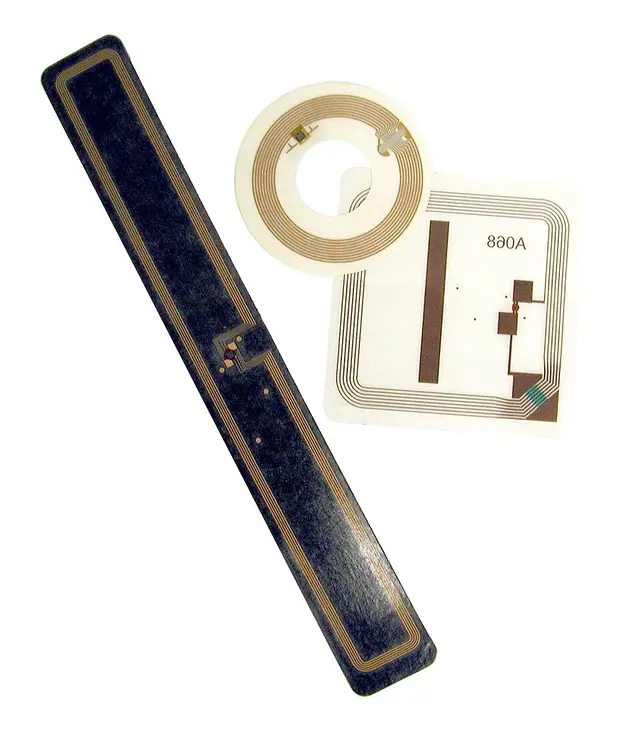 Image: Grika at English Wikipedia, CC BY 2.5, Wikimedia Commons

In short: Radio Frequency Identification — technology for identifying objects contactlessly via radio, usually using small, passive chips (tags).
In more detail: An RFID reader emits a radio signal that supplies a nearby passive RFID tag with energy — the tag then answers with its stored ID, without any battery of its own. Widespread in inventory management, access control and animal identification. NFC is technically a further development of RFID for very short ranges.
In Depth
RFID systems can be distinguished by how the tag is powered: passive tags have no power source of their own — they draw the energy they need exclusively from the reader’s electromagnetic field (by induction), which makes them very small, cheap and practically maintenance-free, but limits the range to a few metres. Active tags have their own battery, which lets them achieve much greater ranges (up to hundreds of metres) and actively send signals, but they’re more expensive and eventually run flat.
The purpose also differs depending on the frequency range used: low frequencies (LF, ~125 kHz) penetrate water and tissue well, which is why they’re used for animal identification (implanted chips), among other things; high frequencies (HF, 13.56 MHz — the same band as NFC) are suitable for access cards and contactless payment cards; ultra-high frequency (UHF) allows very many tags to be read at the same time over a greater distance, which is why it’s widespread in logistics/inventory management (e.g. to record entire pallets of goods in one go, instead of scanning each item individually).
Collision detection with many tags
A technical problem when reading many tags at the same time: if several tags answer the reader’s signal at the same moment, their radio signals overlap and become unreadable (“collision”). RFID systems therefore use anti-collision algorithms, in which the reader specifically “calls” individual tags (based on parts of their unique ID) and thus gradually identifies all tags present one by one, without a person having to hold them in front of the reader individually — this allows hundreds of tags per second to be recorded reliably in logistics applications.
Privacy and security
Because passive RFID tags can typically be read without the wearer’s knowledge or active consent (a reader only has to get close enough), RFID chips in identity documents, clothing with anti-theft tags or employee badges aren’t uncontroversial from a data protection point of view — it’s potentially possible to track where a tag (and therefore often a person) was at what time. Electronic passports therefore encrypt their stored data and additionally require a printed access number to be read before the chip answers at all — a protective mechanism intended to prevent pure “eavesdropping from a distance”.